


News
Preparing For The Future Of Work: Jason Walker Of Thrive HR Consulting On The Top Five Trends To Watch In The Future Of Work
Jason Walker Of Thrive HR Consulting On The Top Five Trends To Watch In The Future Of Work
An Interview With Jake Frankel
Old management styles are gone. Empathetic management is here to stay. The days of the hoodie wearing super technical genius with no people skills as CEO are over.
There have been major disruptions in recent years that promise to change the very nature of work. From the ongoing shifts caused by the COVID19 pandemic, the impacts caused by automation, and other possible disruptions to the status quo, many wonder what the future holds in terms of employment. For example, a report by the McKinsey Global Institute estimated that automation will eliminate 73 million jobs by 2030.
To address this open question, we reached out to successful leaders in business, government, and labor, as well as thought leaders about the future of work to glean their insights and predictions on the future of work and the workplace.
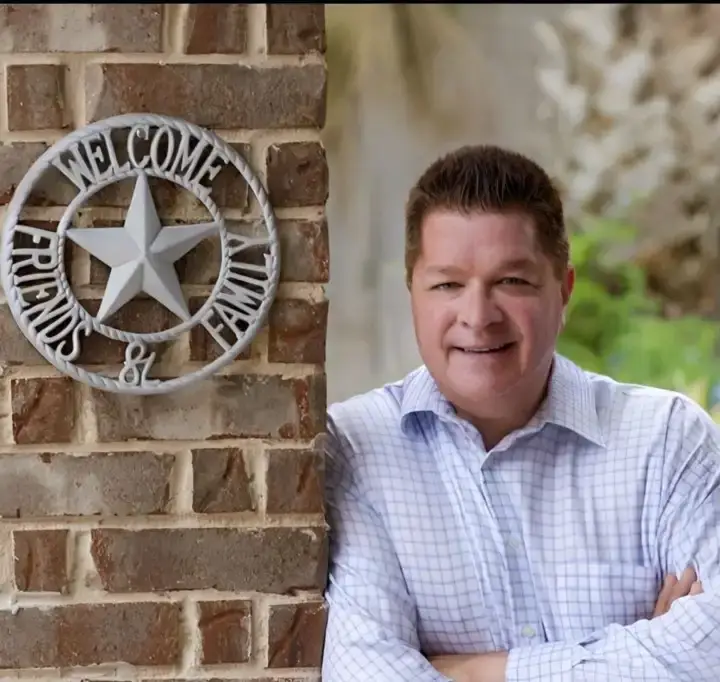
As a part of this interview series called “Preparing For The Future Of Work”, we had the pleasure to interview Jason Walker.
Jason Walker is an HR industry veteran, talent advisor and global speaker helping businesses transform their people practices and policies in the rapidly changing world at work.
In 2020 Jason and his partner Rey Ramirez founded Thrive HR Consulting, an Austin, TX and Denver-CO, based HR advisory firm that seeks to augment HR needs for organizations, providing fractional HR services for leading, managing, or providing guidance in all facets of HR.
Jason has over fifteen years of experience running all phases of a successful human resources operation. His specialties include selecting and retaining top talent, building high-performance teams, and consistently meeting and exceeding external customer’s expectations. Jason has exceptional interpersonal ability to communicate powerfully to all levels of the organization and position and feature HR as an integral part of a successful and profitable company. He also has experience in re-engineering workforces, planning for growth, and contraction throughout the last couple of decades, the dot com bust, the second economic downturn the 2008 Great Recession and is currently assisting companies with Covid-19 efforts.
Thank you so much for joining us in this interview series! Our readers like to get an idea of who you are and where you came from. Can you tell us a bit about your background? Where do you come from? What are the life experiences that most shaped your current self?
I was born and raised in San Francisco and I learned a lot about working with diverse groups of people from an early age. I had learning disabilities that were not diagnosed until much later in life. I had many people in my youth and teens tell me that I was stupid and would never amount to anything. I really viewed myself as somebody you could just forget about. I know what it is like for people to have no regard for you and being in situations that felt very hopeless and you could only rely on yourself because people did not want to spend time helping someone who they did not even consider to me on the margins. I take a great deal of pride in my life now helping others who need it.
What do you expect to be the major disruptions for employers in the next 10–15 years? How should employers pivot to adapt to these disruptions?
Three of the things we need to focus on are:
The choice as to whether or not a young person should pursue a college degree was once a “no-brainer”. But with the existence of many high profile millionaires (and billionaires) who did not earn degrees, as well as the fact that many graduates are saddled with crushing student loan debt and unable to find jobs it has become a much more complex question. What advice would you give to young adults considering whether or not to go to college?
I think one should go to college. I believe there are critical thinking skills and life skills that one develops going to college. I believe that what happened is that there was too much of an emphasis on going to elite schools that were massively expensive for students and parents. I grew up in Silicon Valley. I did not go to Stanford and get saddled with debt. I went to a California State school that was very affordable and paid my way through school by working. I left with no debt. It is a personal decision. Just because you can get into Stanford does not mean that your personal situation says you should.
Despite the doom and gloom predictions, there are, and likely still will be, jobs available. How do you see job seekers having to change their approaches to finding not only employment, but employment that fits their talents and interests?
Technology drives our country skilled workers will always be in demand. However this notion of I want to do what fits my talents and interests is something of a red flag to me. There are times in our career where we will have to take a job that may not be what we want, that maybe is 50% of what we aspire for. Not getting exactly what you want when you want it makes you grow and learn quite a bit. I don’t think you should toil in something that makes you miserable, but also this notion of work being everything I want it to perhaps is a bit to utopian and we need to pivot back to the middle.
The statistics of artificial intelligence and automation eliminating millions of jobs, appears frightening to some. For example, Walmart aims to eliminate cashiers altogether and Dominos is instituting pizza delivery via driverless vehicles. How should people plan their careers such that they can hedge their bets against being replaced by automation or robots?
Stay ahead of the AI. That might sound like a cheeky answer but if you look at your job and start understanding what AI is capable of, that should spur you. It should spur you to keep current on your skills, stay relevant in your field. There are going to be jobs that are going to be done by AI in the future. I think television news will be done by AI very easily for the AI to narrate the news and for a computer generated image to read it through the AI. Manual repetitive work or work that a computer can do now is a target for AI. Accounts payable and accounting are targets as well. Work on your critical thinking skills, analytical skills and people skills. If those are outstanding, the AI will never put you out of work.
Technological advances and pandemic restrictions hastened the move to working from home. Do you see this trend continuing? Why or why not?
Remote work is here to stay, and quite frankly if we are truly committed to reducing emissions in our country, we should be looking at people to no longer commute and work from home. The genie is out of the bottle .We can do it. We have the tools to do so.
What societal changes do you foresee as necessary to support the fundamental changes to work?
The days of the command and control management style are over, and the office being the hub of the wheel and the other offices where the spokes all connected to the main office is an outdated model. People want independence, they want freedom. They want to be in their house working, they want a great boss and a company that values them. Pulling everyone back into an office is not the answer and although some employees might do it, it won’t last. Those companies that embrace a better way are the ones that will come out on top.
The COVID-19 pandemic helped highlight the inadequate social safety net that many workers at all pay levels have. Is this something that you think should be addressed? In your opinion how should this be addressed?
The beginning of the pandemic pretty much washed everybody out. I was in the process of taking a new position and everything I had in progress was eliminated. Businesses lost 100% of their pipeline of bookings overnight. We had never seen anything so antagonistic in our economy. I think things like fixing the broken EDD systems are important. People could not access unemployment insurance because websites and call centers were overwhelmed. We had no playbooks to handle the pandemic. It was all green field for everyone. I think that being ready and prepared for the next big thing, whatever that is, should be in the forefront of our minds.
Despite all that we have said earlier, what is your greatest source of optimism about the future of work?
People want to work, they want to be successful. They believe in themselves. Although there may be an economic malaise right now, that is not how we truly are. I am optimistic because there are always smart people who want to challenge the system and make it better.
Historically, major disruptions to the status quo in employment, particularly disruptions that result in fewer jobs, are temporary with new jobs replacing the jobs lost. Unfortunately, there has often been a gap between the job losses and the growth of new jobs. What do you think we can do to reduce the length of this gap?
This is an economic issue, jobs are created when there is confidence in the economy. If employers feel that there are too many economic headwinds, jobs dry up and caution comes into the hiring market. During cautionary periods, employers need to be flexible to take more gig or contract jobs. Companies are reluctant to take on fixed costs when there is economic uncertainty. Inflation needs to slow, and at some point, interest rates need to stabilize or come back down in order for companies to have more free cash flow to hire.
Okay, wonderful. Here is the main question of our interview. What are your “Top 5 Trends To Watch In the Future of Work?”
Can you please give us your favorite “Life Lesson Quote”? Can you share how this quote has shaped your perspective?
“Life is not fair” sometimes there are things that happen that are just lousy to us in business and life. We can’t hold onto our resentments when these things happen. We need to learn to be positive in the face of disappointments and keep moving!
We are very blessed that some of the biggest names in Business, VC funding, Sports, and Entertainment read this column. Is there a person in the world, or in the US with whom you would love to have a private breakfast or lunch, and why? He or she might just see this if we tag them.
I would love to have a conversation with Dusty Baker, the Houston Astros Manager who just won the world series. Dusty has managed for a long time and just finally won the world series after coming close several times, but ultimately losing. I would like to ask him how did he bounce back front he disappointments he faced to ultimately win the world series. I think it important in life to know how to be resilient.
Our readers often like to follow our interview subjects’ careers. How can they further follow your work online?
The best way to follow me is follow me on LinkedIn at Jason Walker https://www.linkedin.com/in/jason-walker-7a7a/ or on our website at www.thrivehrconsulting.com
Thank you for these fantastic insights. We greatly appreciate the time you spent on this. We wish you continued success and good health.