




News
Is the Great Remote Work Experiment Over?

Article Written By: Frederic Lee
Starbucks is the latest big company to ramp up in-office requirements for corporate staff, as chief executive Brian Niccol issued a directive to workers last week raising the time required on-site to four days per week, rather than three.
"We know we're asking a lot of every partner as we work to turn the business around," he wrote, according to the Financial Times.
CEOs this year have increasingly tightened the reins on in-office work, with other business leaders such as JPMorgan Chase's Jamie Dimon and Amazon's Andy Jassy invoking productivity as a chief reason to bring staffers back on-site, five years after the Covid-19 pandemic kicked off the great remote-work experiment.
However, the CEOs might not get what they're bargaining for.
For example, a new study suggests productivity is notably higher among workers putting in hours at home, versus those physically present in the workplace.
The finding casts doubt on a philosophy among execs that productivity rises when workers are required to be physically present in the workplace.
Indeed, benefits abound when it comes to working from home for large swaths of the workforce, and while certain industries must require in-office work to be successful — such as those producing a physical product — corporate directors, especially those at companies with attrition issues, should keep the option of more flexible work arrangements in order to attract quality talent, sources tell Agenda.
The study, out of the London School of Economics, found that workers were 12% more productive when working from home compared to working in the office.
The productivity gain appears to be primarily driven by differences in noise levels and distractions, Alessandra Fenizia, assistant professor of economics at George Washington University and one of the authors of the study, told Agenda in an email. The office environment in the study — a data entry unit of the Greater Manchester Police — is notably noisy and potentially distracting, while the home environment is significantly quieter, wrote Fenizia.
Corporate boards contemplating whether a full return to office or a more flexible work arrangement is ideal should make the decision with insight from empirical data pertaining to current worker productivity and work quality — as opposed to making moves based on a gut feeling that the business isn't doing as well as it could be, said Jason Walker, co-founder of Thrive HR Consulting, told Agenda.
Conversely, companies that are struggling to hire may want to consider developing a remote or hybrid work model in order to attract more candidates, said Walker.
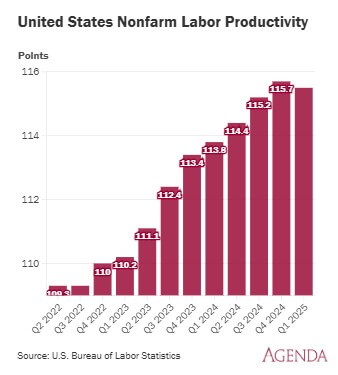
Police staff carrying out the task in the study alternated between working from home and working from the office. The study stated that the police unit was an ideal setting to study the impact of working from home on workers' productivity, because there's an objective and well-measured metric to evaluate workers' performance — the number of cases recorded per day — as well as staff's alternating working at the office and at home.
Still, researchers cautioned that business leaders should think through how the results could apply to their own workforces and business environments.
Work Philosophies
A number of different work philosophies have emerged in recent years, said Davia Temin, president and CEO of management consultancy Temin and Company Inc. Temin said that when she first started working, she had one answer for every request from bosses: Yes.
But now, work-life balance concerns are shifting some workers' approach. One such example is when workers reject certain job tasks because of personal responsibility, such as having to pick up their children from school.
Meanwhile, the debate over the benefits and drawbacks of remote and hybrid work has roiled the corporate world since companies moved large swaths of their workforces off-site during pandemic-induced social distancing measures in 2020 and 2021. When and how often to bring them back has been a matter of intense debate ever since.
Many employees at traditional industrial companies and those that produce a physical product don't have the option of not being present, said Temin. CEOs may want white-collar workers at those companies to also come in out of a sense of fairness.
Meanwhile, CEOs of more white-collar sectors initially seemed inclined toward a flexible work setup for employees that could involve remote work, said Temin.
However, over the past two years, the sentiment of CEOs at large brand-name employers like Google, JPMorgan Chase, Amazon, Apple and others has shifted, largely requiring workers to appear in-office, because they deem in-office work critical to the business and are looking to boost productivity, Walker said.
In certain fields, such as software development, there's a consensus that the work is done well in teams and that an in-office environment allows for more collaboration, said Walker. Others, such as financial services companies, have zeroed in on an apprenticeship model in which more junior workers learn better by being around the higher-ups within the organization in-office, said Walker.
Further, it can be disconcerting for a company's CEO or chief financial officer to look across an office space and see empty desks in light of the costs that have gone into the work environment, said Walker.
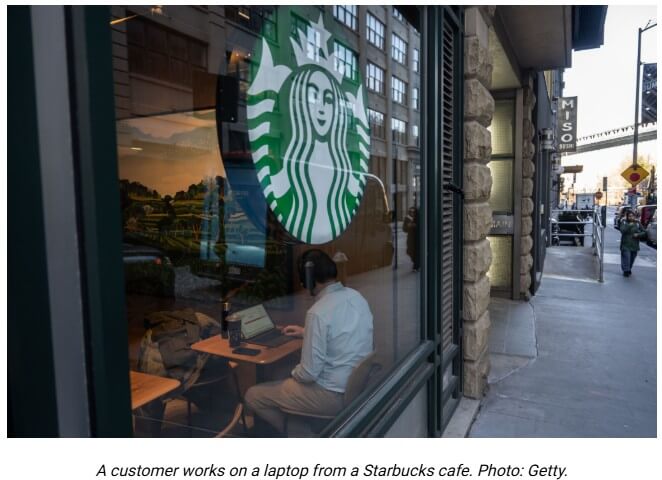
At Starbucks, Niccol is attempting to reverse a decline in sales at the company.
"We are re-establishing our in-office culture because we do our best work when we're together. We share ideas more effectively, creatively solve hard problems and move much faster. Being in-person also helps us build and strengthen our culture," he wrote in the staff memo. "As we work to turn the business around, all these things matter more than ever."
The coffee chain is offering exit payments to employees who want to "opt out" of the company now rather than ramp up their in-office attendance, according to the FT.
Requiring workers to return to the office can sometimes backfire. JPMorgan executives acknowledged a decline in employee morale tied to the firm's strict return-to-office policy, according to an internal memo obtained by Barron's. Fewer workers reported that they view health and well-being as a corporate priority compared to last year's survey, the memo said.
According to Temin, many CEOs with whom she's worked believe in an inevitable march back to the office, first part time, and then full time, such that everything would go back to the way it was pre-Covid. "A lot of boards and a lot of CEOs still believe that," she said.
Yet there are benefits for businesses that support remote work, sources said.
For example, many smaller companies are using a remote or hybrid work style to their advantage to attract workers who might otherwise seek out a larger employer, said Walker.
Further, individuals being forced back to the office by their company's management unwillingly are "all looking for jobs where they have more flexibility," said Walker. However, if the money is right, they will likely "suck it up" and be in the office as required, he added.
Think Things Through
Leadership teams at businesses ramping up in-office requirements need to "think things through" to ensure they are instilling a collaborative environment — rather than one in which workers simply do the same tasks in isolation at their desks, said Walker. That comes from boards' developing a philosophy behind the push to return to office, he said. They also need to determine how it will impact employees in different geographies.
One important takeaway from the George Washington University study is that "middle managers play a key role in helping organizations realize the benefits of working from home," wrote Fenizia.
The study found that employees were more productive when assigned work by a manager, rather than by a computer. "Good management is critical for unlocking the productivity gains from flexible work arrangements, even if the specific strategies vary across settings," she said.
Still, Fenizia urged leaders to take caution when thinking about how to apply the results of a single study to their own context: Even companies in the same sector may differ substantially in work culture, job design and monitoring practices.
"Based on our findings and those of similar studies, the productivity effects of working from home are likely to vary depending on the specific features of the setting, the nature of the tasks and the characteristics of the workers involved," she wrote.
For more information on this topic, contact Thrive HR at (408) 799-1425 or www.thrivehrconsulting.com